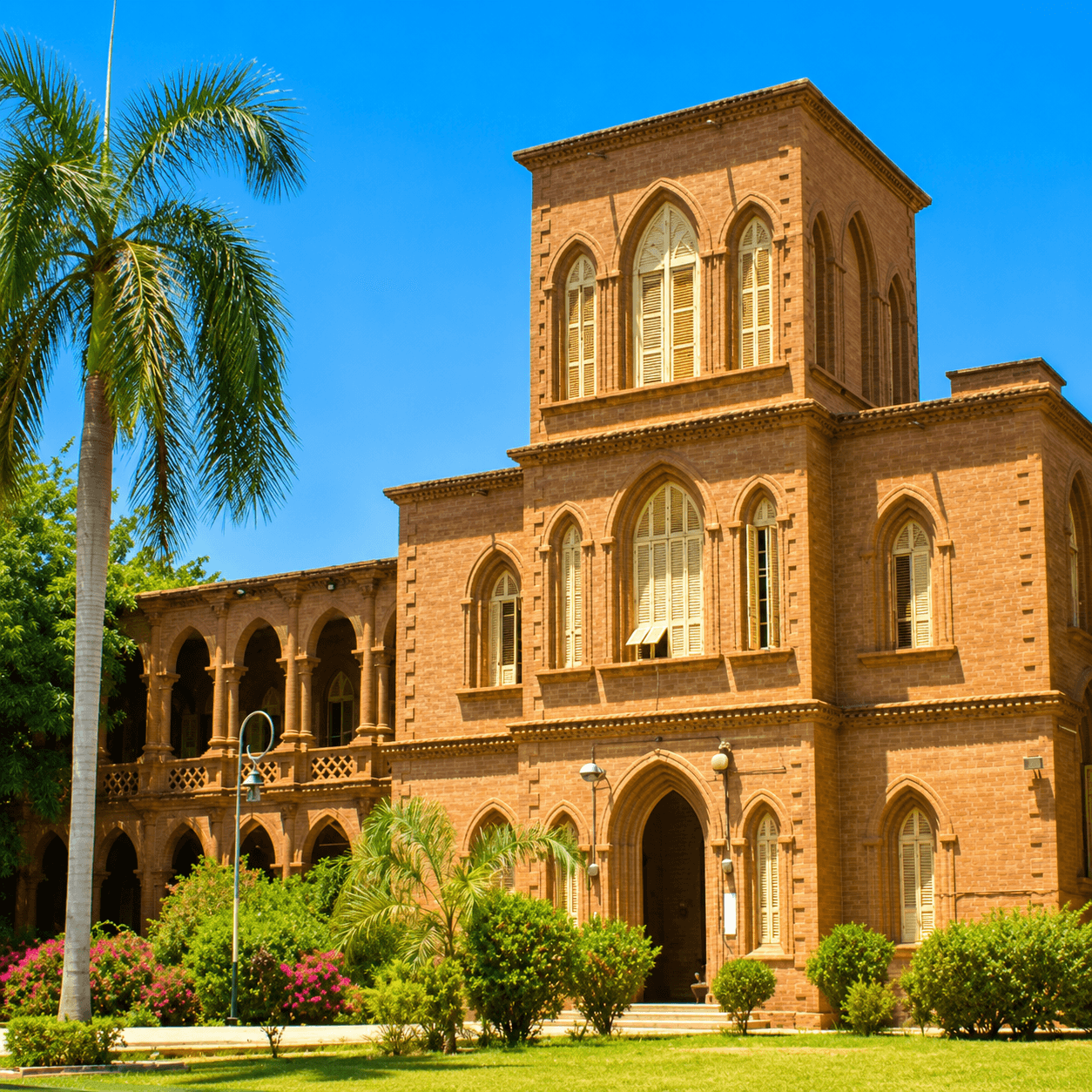
The University of Khartoum (U of K) is Sudan's flagship institution of higher learning and one of the oldest and most prestigious universities on the African continent. Its story begins in 1902 with the opening of Gordon Memorial College, established in Khartoum in memory of General Charles Gordon and funded largely by public subscription — an initial target of £100,000 was reportedly met within weeks. What began as a cluster of primary, industrial and teacher-training schools matured over the first half of the twentieth century into a fully fledged institution of tertiary education.
A defining milestone came in 1924 with the founding of the Kitchener School of Medicine, Sudan's first medical school and the seed of a medical tradition for which the university remains renowned. Further faculties followed: a School of Law in 1936, Agriculture and Veterinary Science in 1938, Science in 1939 and Arts in 1940. From the mid-1940s the college was affiliated with the University of London, awarding London-recognised degrees; in 1951 it was reconstituted as University College Khartoum, and in 1956, the year of Sudan's independence, it attained full autonomy as the University of Khartoum.
Across its multiple campuses the university has, in figures reported before recent disruption, comprised more than twenty faculties and institutes, roughly 16,800 undergraduates and around 6,000 postgraduate students, supported by some 850 academic staff. Its faculties of Medicine, Engineering and Architecture, and Law are among the most respected in the region, complemented by strong programmes in agriculture, veterinary science, pharmacy, science and the humanities. The university has long hosted specialised research centres — including the internationally recognised Mycetoma Research Centre and the Institute of Endemic Diseases — and its central library, holding several hundred thousand volumes, has functioned as a national scholarly repository.
The University of Khartoum's most compelling asset is the calibre of the people it has produced. Its alumni include heads of government and senior statesmen such as former Prime Minister Abdalla Hamdok and the late SPLM/A leader John Garang; leading scientists such as Mansour Ali Haseeb, the first Sudanese professor of medicine, and Elfatih Eltahir, professor of hydrology and water resources at MIT; and towering literary and scholarly figures including the novelist Tayeb Salih, author of Season of Migration to the North, the writer Leila Aboulela, and the legal scholar Abdullahi Ahmed An-Na'im of Emory University. Generations of physicians, engineers, jurists, teachers and civil servants trained here have shaped not only Sudan but institutions across Africa, the Arab world and the global diaspora.
For international and African students, the University of Khartoum represents a historic gateway to rigorous, English-influenced higher education with deep regional roots. Its long tradition of academic freedom, its record of research addressing diseases and challenges specific to the African environment, and its extensive alumni network give it enduring significance well beyond Sudan's borders. As a legacy institution, it stands as a symbol of Sudan's long investment in learning and of the country's potential to remain a centre of scholarship in the region.