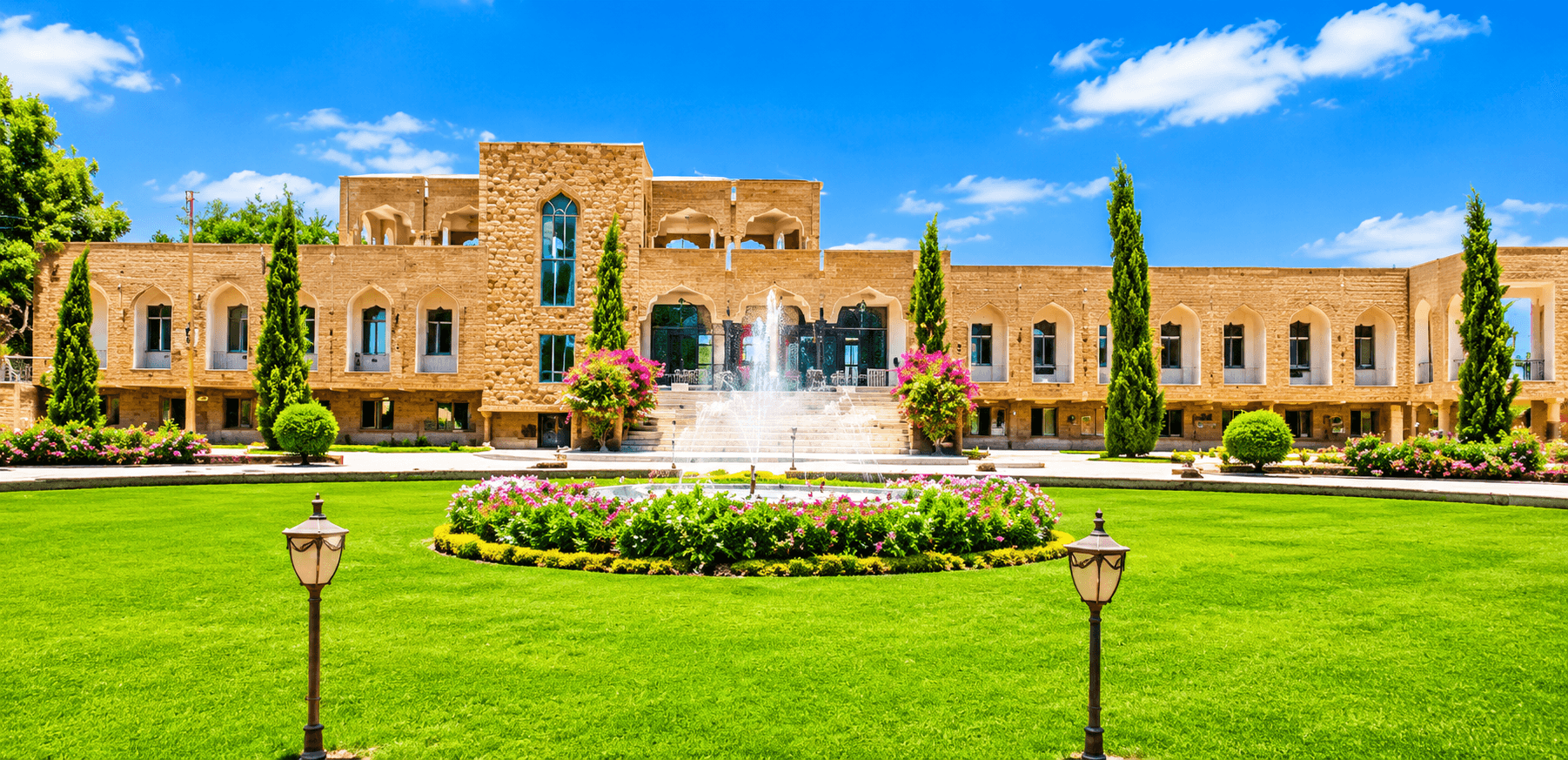
The University of Gezira, headquartered in Wad Madani in the heart of Sudan's central agricultural belt, is one of the most respected universities in the country and a genuine pioneer in medical education across Africa and the Arab world. It was established by Republican Decree on 9 November 1975, with the Gezira region deliberately chosen for its agricultural, economic and social significance. Teaching began in 1978 with four founding faculties: Agricultural Sciences; Economics and Rural Development; Medicine and Health Sciences; and Science and Technology. From these beginnings it grew into a comprehensive institution, reported in recent years to encompass around 23 faculties across roughly a dozen campuses, together with a Postgraduate College, a Community College, and nine specialised research institutes, among them the National Cancer Institute and an institute for water management and irrigation.
The university's most celebrated achievement is its Faculty of Medicine (FMUG), which introduced a community-oriented, community-based curriculum that was innovative not only in Sudan but internationally. Developed under Professor Bashir Hamad, the model integrates the social sciences with clinical practice, exposes students to real communities from the second year of the five-year programme, and combines field training, research and a rural-development course. It pioneered family-medicine training and primary health care, and its approach was subsequently adopted by numerous medical schools across Sudan and the wider region.
This work has drawn sustained international recognition. FMUG has been recognised as a World Health Organization collaborating centre, its community-medicine centre, established in 1978, being the first of its kind in the country. The faculty has been cited among a small group of medical schools worldwide regarded as leaders in socially accountable health-professional education, and it is a founding member of THEnet, the Training for Health Equity Network. Its distinctions include the Hamdan Award for the best medical college in the Arab world (2001-2002) and the Islamic Development Bank Prize for Science and Technology (2017).
Agriculture is the university's second great strength. Its proximity to the Gezira Scheme, historically one of the largest irrigated agricultural projects in Africa, shaped a founding mission to serve rural development, and its agricultural and rural-economics faculties were designed to supply high-calibre graduates and applied research to that landscape. The university was also among the first in Sudan to deliver instruction across all its colleges in Arabic and has produced a substantial body of Arabic-language academic texts.
For international students, the University of Gezira offers a distinctive proposition: a medical education globally recognised for its community-based philosophy, strong programmes in agriculture and the health sciences, and a mission explicitly rooted in social accountability and service. Graduates of its family-medicine and medical-education master's programmes have carried the Gezira model into health systems well beyond Sudan.
The enduring legacy of the University of Gezira lies in this combination of scientific rigour and social purpose. Its influence on how medicine is taught, locally, regionally and internationally, is a lasting contribution, and its institutional strengths in health and agriculture represent significant long-term potential for the country and the region.