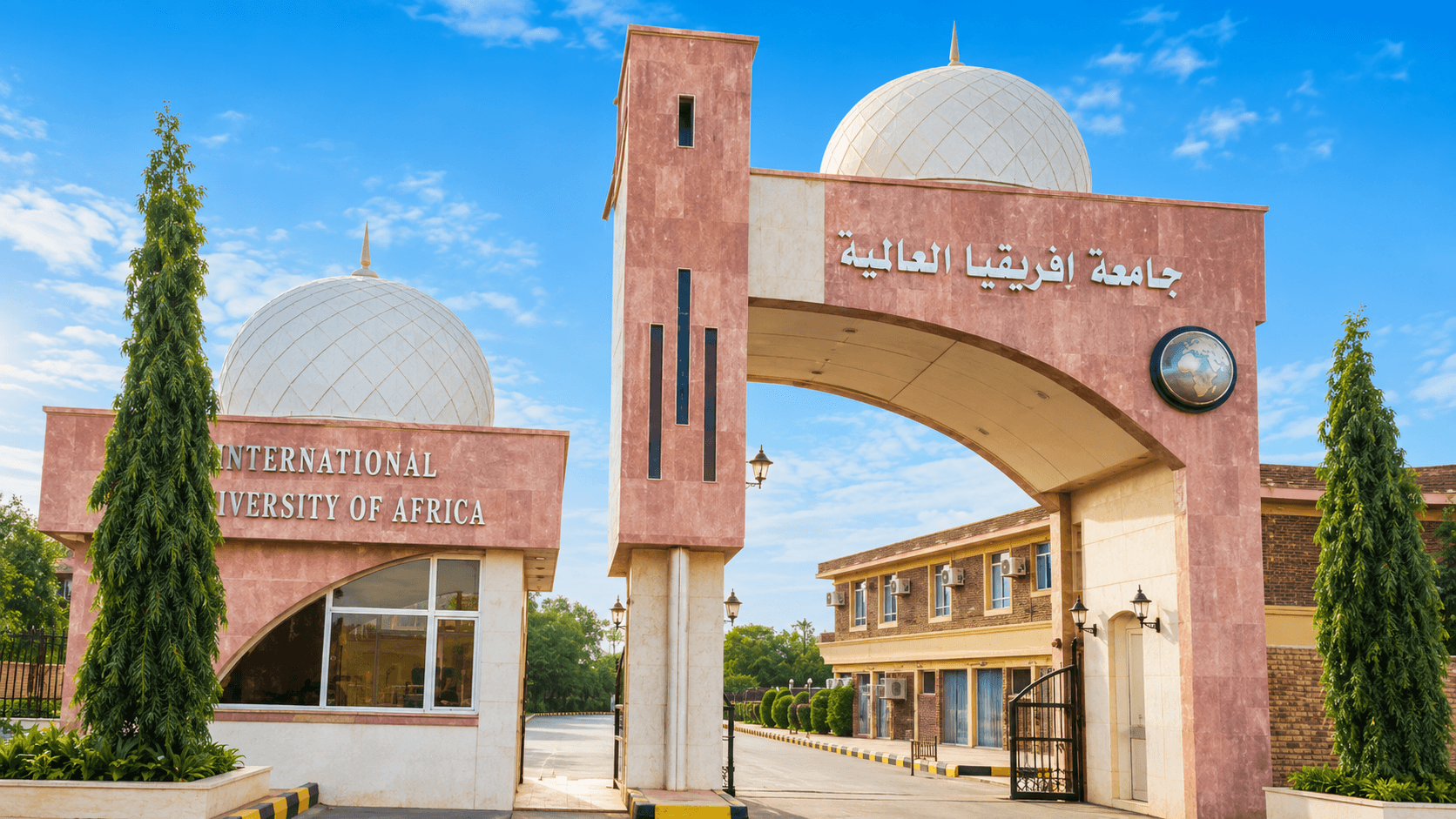
The International University of Africa (IUA), based in Khartoum, is one of Sudan's most distinctive institutions, defined by an explicitly pan-African and international mission. It grew out of the Islamic African Centre, founded in Khartoum in 1977 to provide education and training for young people drawn from across the African continent. In 1991 the centre was elevated to full university status and renamed the International University of Africa, retaining its founding vocation of serving students from beyond Sudan's borders while broadening into a comprehensive university.
What sets IUA apart is the breadth of its international student body. In figures reported before recent disruption, the university educated on the order of 6,000 students drawn from more than ninety countries, with especially large cohorts from across sub-Saharan and West Africa. Nigeria, Somalia, Kenya, Cameroon, Chad and the countries of the Horn of Africa have all been well represented, and for many families across the Muslim world IUA became a recognised destination for affordable higher education abroad. Its Khartoum campus, spread across roughly ninety acres, has housed a large complex of faculties, halls of residence and facilities designed specifically to host and support students living far from home.
Academically, the university combines faculties of Islamic Studies, Sharia and Arabic language with faculties of Medicine, Engineering, Pure and Applied Sciences, Education and the Humanities. Instruction reflects this dual character: Arabic is the medium in Islamic studies and much of the humanities, while medicine, engineering and the sciences are commonly taught in English, easing the path for students from anglophone African countries such as Nigeria and Ghana. Alongside its degree programmes, IUA has historically operated Arabic-language teaching institutes that prepare non-native speakers for further study.
Scholarships have been central to the university's identity and reach. IUA has long provided full and partial scholarships — covering tuition and, in many cases, accommodation — to students from lower-income backgrounds across Africa and the wider Muslim world, and it has partnered with international bodies to expand these opportunities; a recent example is a cooperation with ICESCO (the Islamic World Educational, Scientific and Cultural Organization) to allocate one hundred scholarships for students from member states. Bilateral academic agreements with universities in Malaysia, Pakistan, Jordan and across Africa further reflect its outward-looking posture.
For Nigerian and West African students in particular, IUA holds special relevance. Over the decades it has educated significant numbers of Nigerians, many of whom returned home to serve as teachers, imams, Arabic and Islamic-studies specialists, physicians and community leaders, weaving durable links between Sudan and West Africa. The university's combination of a genuinely continental student community, a bilingual academic environment and an established scholarship culture gives it a rare pan-African character.
As a legacy and potential asset, the International University of Africa embodies Sudan's historic role as a bridge between the Arab world and sub-Saharan Africa, and as a hub where students from dozens of nations have studied side by side.