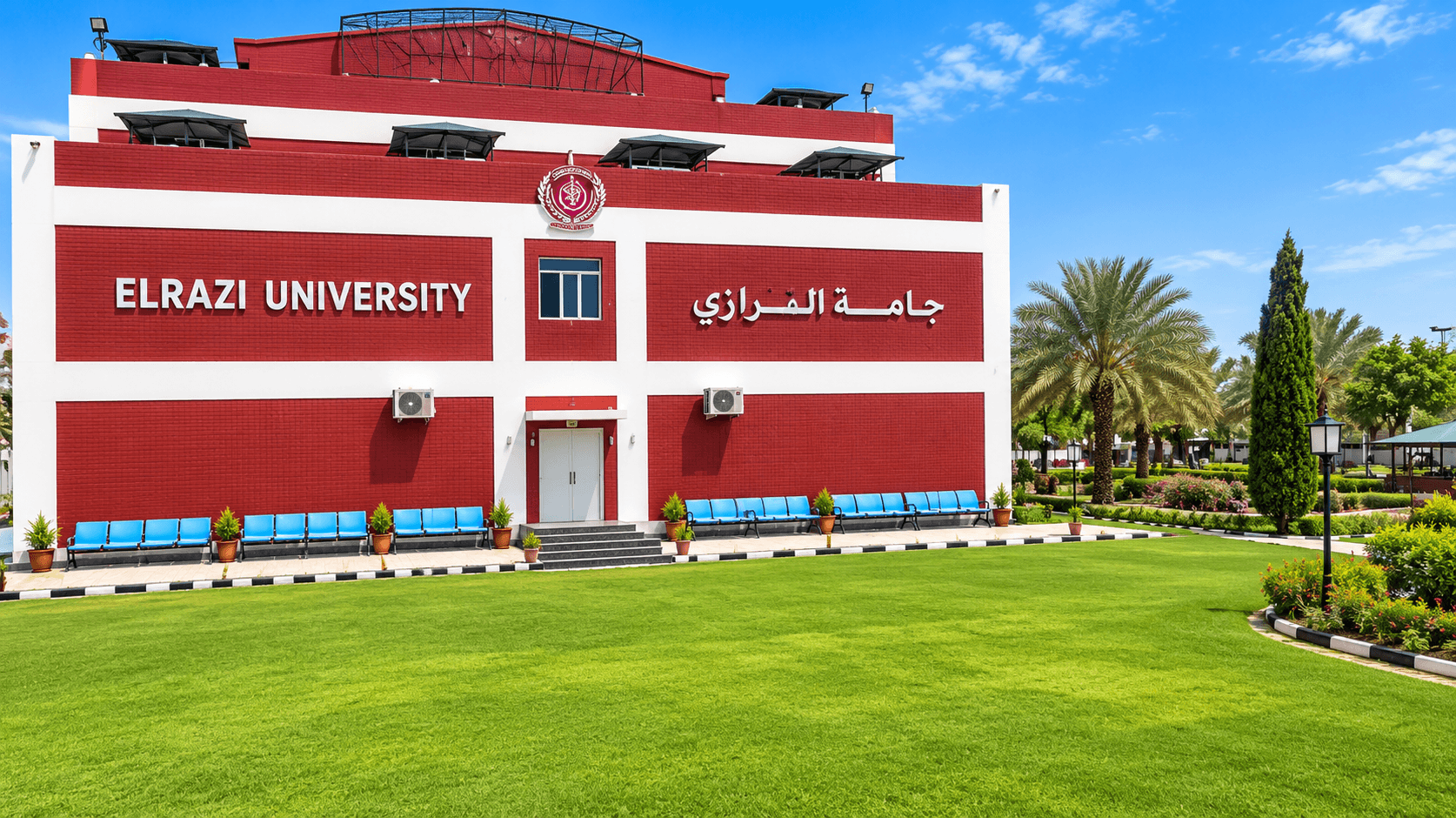
Al-Razi University — officially romanised as Elrazi University — is a private Sudanese institution in Khartoum specialising in health and medical sciences. Established in 2001, with its first cohort admitted to the dental programme in the 2001/2002 academic year, it emerged during a period of rapid growth in Sudanese private higher education and quickly built a focused identity around the training of health professionals.
The university bears the name of Abu Bakr Muhammad ibn Zakariya al-Razi (c. 865–925), known in the Latin West as Rhazes — one of the most influential physicians, chemists and scholars of the medieval Islamic world and a foundational figure in the history of clinical medicine, celebrated for his careful bedside observation and his voluminous medical writings. It is a fitting namesake for an institution whose programmes concentrate almost entirely on medicine and the allied health fields.
Al-Razi University's academic offering spans Bachelor's degrees in Medicine (MBBS), Dentistry, Pharmacy, Nursing Sciences, Medical Laboratory Sciences and Medical Radiology, together with a Bachelor in Optics and diploma programmes such as Dental Technology. In figures reported before recent disruption, the university enrolled well over three thousand students, and multiple graduating cohorts had already progressed through its dental, pharmacy, medical and dental-technology programmes. Its campus, covering more than 55,000 square metres, has included teaching-hospital and clinical facilities alongside administrative and academic buildings — infrastructure geared toward the practical, hands-on training that health education demands.
The institution has been recognised and accredited by Sudan's Ministry of Higher Education and the Sudan Medical Council, and it holds membership in the Association of Arab Universities; its medical programme has featured in international medical-school listings of the kind used by regulators and prospective students worldwide. Al-Razi has also pursued international collaboration, establishing agreements with institutions abroad including the University of Tanta in Egypt and universities in the United Kingdom, supporting the exchange of expertise and the alignment of academic standards.
For international and African students, a focused health-sciences university of this kind carries real significance. Sudan has a long and respected tradition in medical education — its physicians have practised across the Gulf, Africa and beyond — and private institutions such as Al-Razi expanded the capacity of that tradition, offering structured, professionally oriented programmes in English-influenced curricula. For students from neighbouring African countries seeking medical, dental or pharmacy training, such universities historically represented an accessible route into the health professions.
As a legacy and potential asset, Al-Razi University reflects the diversification and modernisation of Sudanese higher education in the twenty-first century, and the country's continuing role as a producer of skilled health-care professionals for the wider region.