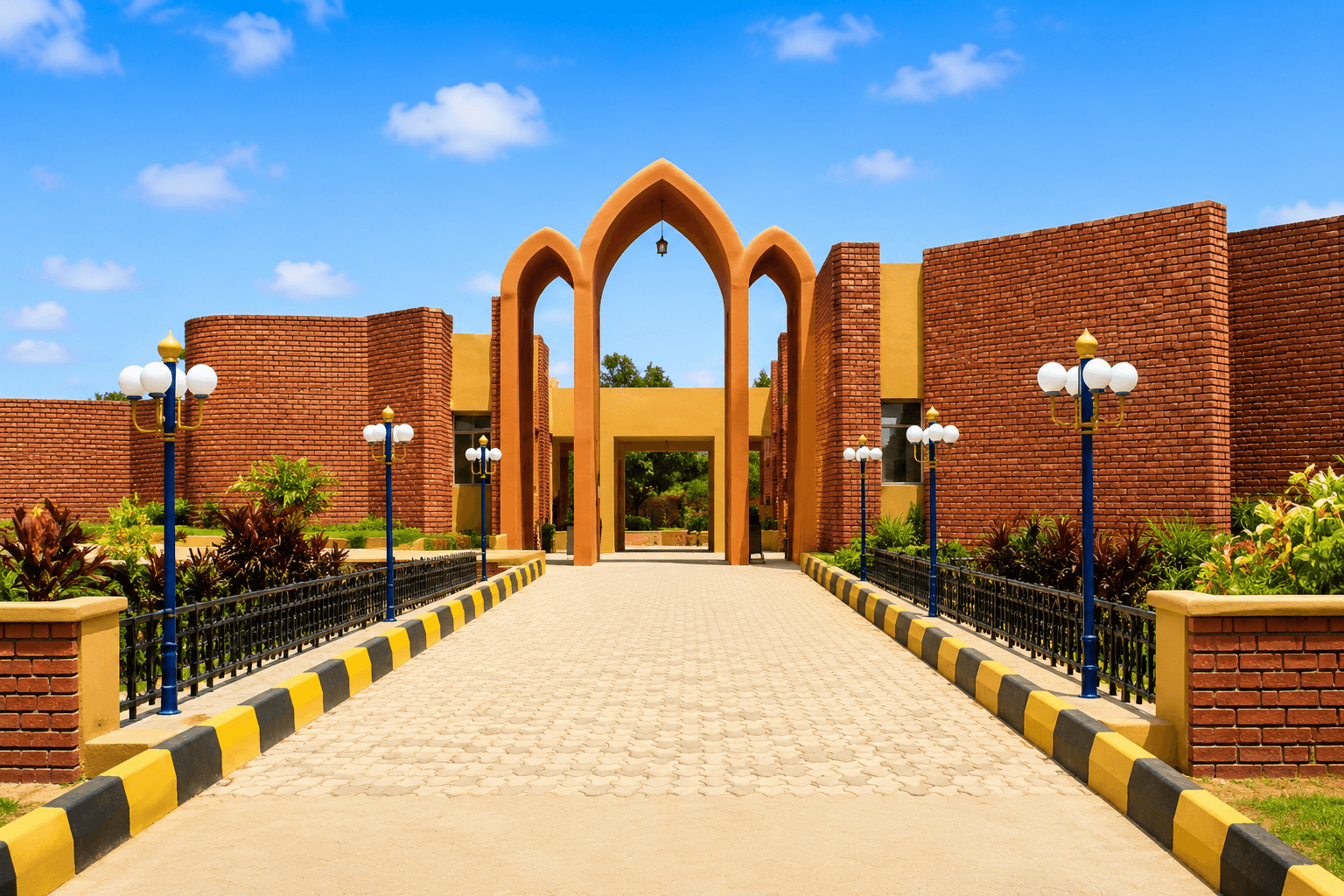
Ahfad University for Women (AUW), in Omdurman, is a landmark institution in the history of women's education in Sudan and Africa. Its lineage reaches back to 1907, when the educational pioneer Sheikh Babiker Badri — a Mahdist veteran turned champion of learning — opened the first private school for girls in Sudan, in the town of Rufa'a. He had petitioned the colonial authorities more than once before permission was granted, and his first class numbered only seventeen pupils, several from his own family, taught in the simplest of premises. That act of conviction seeded a family tradition of educating women that has now spanned more than a century.
The modern university took shape in 1966, when Babiker Badri's son, Professor Yusuf Badri, founded Ahfad University College for Women at the family's school site in Omdurman, beginning with just 23 students and three faculty members. In 1984 the National Council for Higher Education authorised the college to confer Bachelor of Science and Bachelor of Arts degrees, and in 1995 it was elevated to full university status as Ahfad University for Women. Leadership has passed through three generations of the Badri family, with Professor Gasim Badri serving as president — a continuity of purpose rare among universities anywhere.
Ahfad is widely regarded as one of the oldest and largest private universities in Sudan and among the most important centres of women's higher education on the African continent. Teaching in English, it has organised its work through schools including Medicine, Pharmacy, Health Sciences, Psychology and Pre-School Education, Management Studies, and Rural Extension Education and Development, alongside graduate programmes in fields such as Gender and Development, Peace Studies and Business Administration. This distinctive mix reflects the university's founding philosophy: educating women not only as professionals but as agents of change within their families and communities.
What has always distinguished Ahfad is its explicit mission of empowerment and development. Beyond conventional academic training, the university has emphasised leadership, public health, rural extension and community service, sending students into villages and underserved areas to apply their learning directly. Its graduates — doctors, pharmacists, psychologists, managers and development specialists — have become influential across Sudanese society and the broader region. Through its African Fellowships Programme, Ahfad has deliberately extended its reach to women from other African countries, positioning itself as a continental resource for female education and leadership rather than a purely national one.
For international and African students, Ahfad offers something distinctive: a university built from the ground up around the education and advancement of women, with a century-long track record and an international reputation earned through recognition, partnerships and research on gender, health and development. It has drawn scholarly attention and support from institutions and donors abroad precisely because its model — combining professional education with grassroots development — speaks to challenges shared across the developing world.
As a legacy and potential asset, Ahfad University for Women stands as one of Sudan's proudest contributions to global education: living proof of a vision, begun in 1907, that the education of women is central to the progress of a nation and a continent.