Tuti Island sits at the very heart of Greater Khartoum, cradled precisely where the Blue Nile, flowing from the Ethiopian highlands, meets the White Nile arriving from the great lakes of East Africa. This meeting point — one of the most storied confluences in the world — gives the island its unique position: visible from all three of Khartoum's twin cities (Khartoum, Omdurman, and Khartoum North), yet a world apart in pace and character.
For generations, Tuti's fertile silt has made it a market garden for the capital, its fields producing vegetables, guava, and citrus that supply Khartoum's markets. Traditional mudbrick houses and narrow lanes give the island a village atmosphere rarely found elsewhere in a capital city of several million people, while a bridge connecting it to central Khartoum has, in recent years, brought the island closer to the urban life surrounding it without erasing its own.
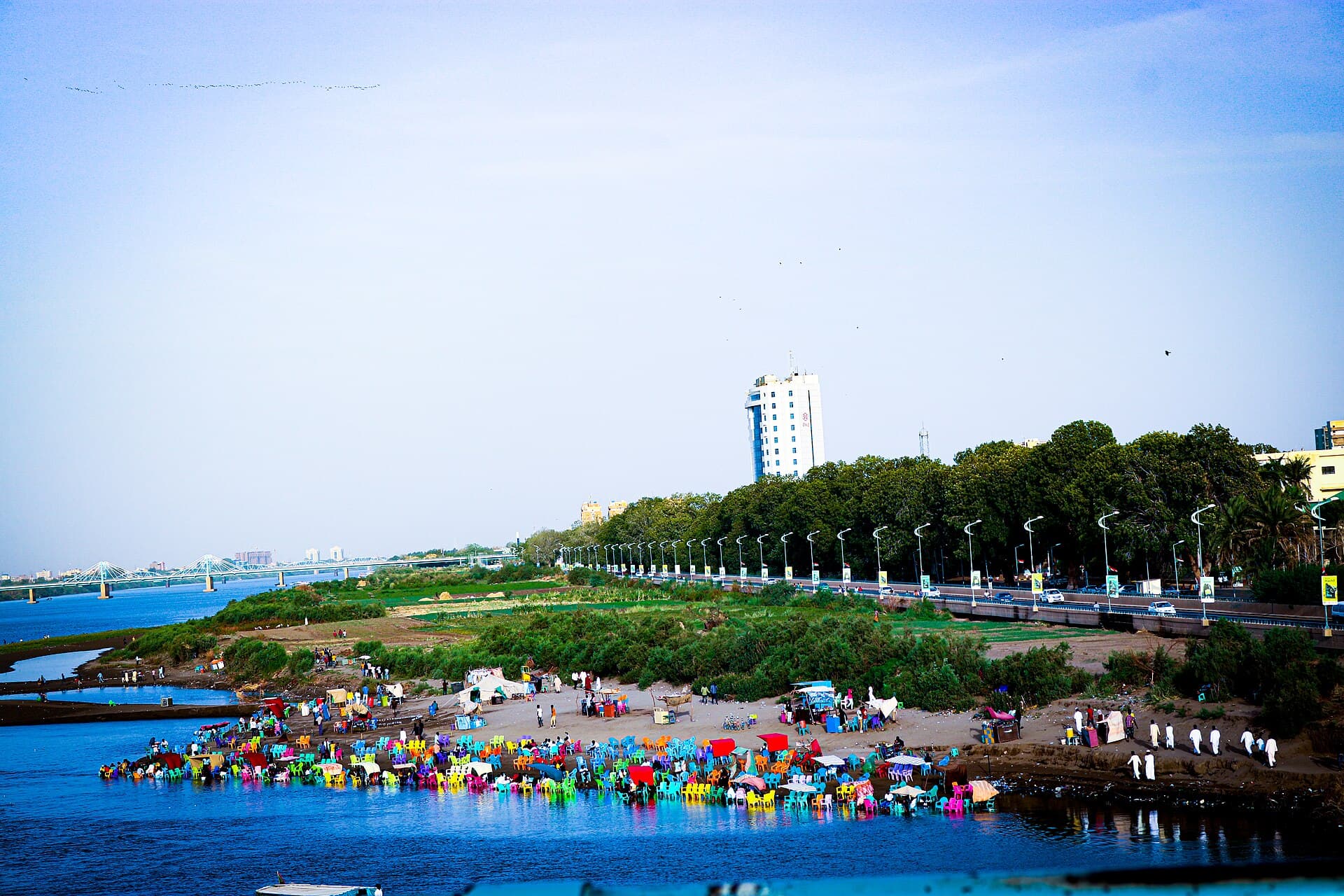
As evening falls, the island's riverside — along with the wider confluence area — becomes a gathering place: families and friends bring chairs down to the water's edge, tea and coffee vendors set up along the banks, and the meeting of the two Niles, each carrying a different shade of water, colours the horizon at sunset.