
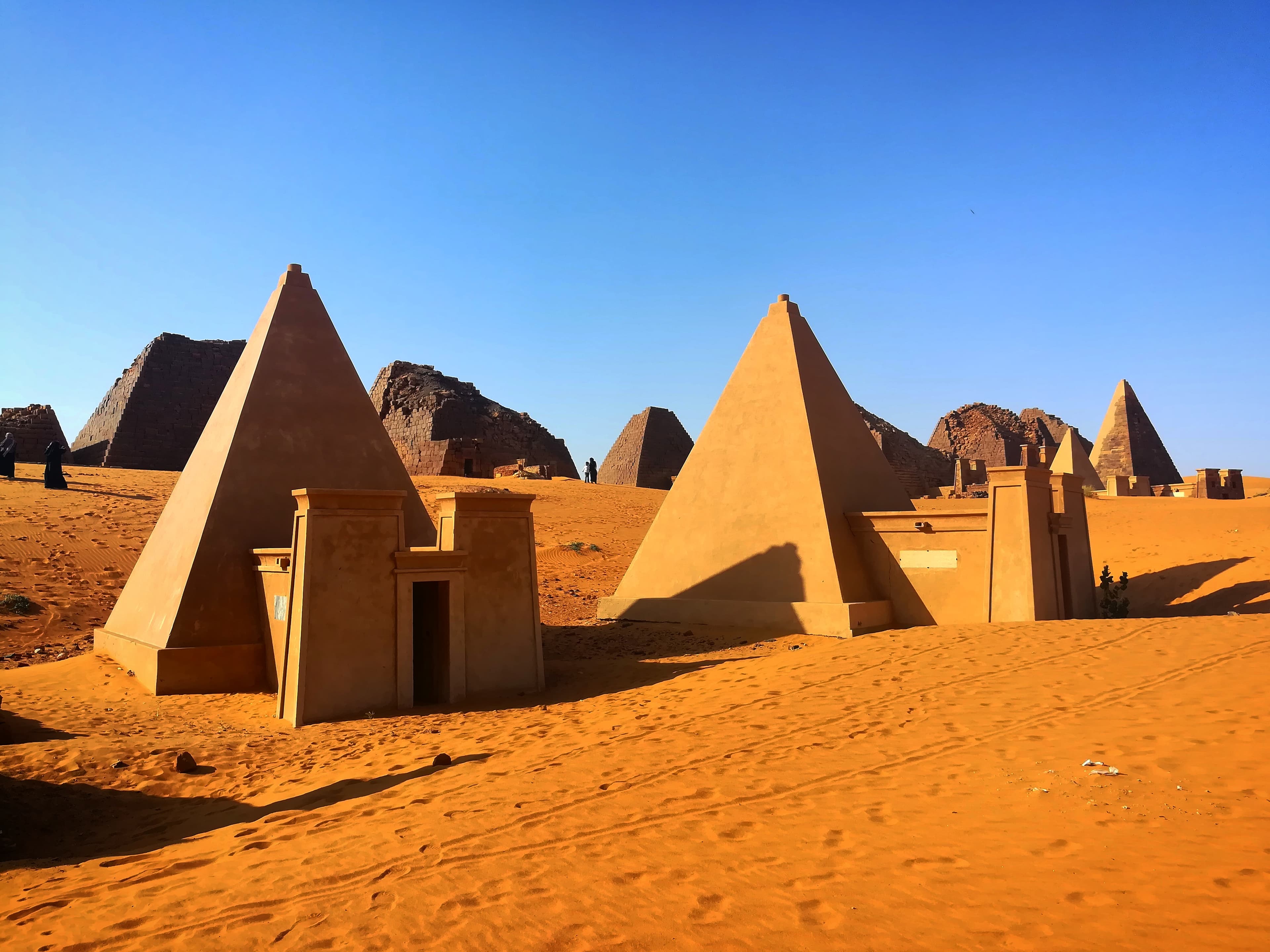
At Meroe, more than two hundred pyramids mark the tombs of the kings and queens of Kush, rising from the desert on the Nile's east bank near the village of Bagrawiya. Steeper and narrower than their Egyptian counterparts, they were built over centuries as Meroë grew into the capital of a powerful African kingdom that once ruled from the Mediterranean border of Egypt deep into the African interior.
The pyramids served as royal tombs, their walls once adorned with reliefs depicting the rulers' deeds and their journey to the afterlife. Today, they stand as one of the greatest archaeological landscapes in Africa — a testament to a civilization that flourished for nearly a thousand years, blending its own Nubian traditions with influences from ancient Egypt.
The site was inscribed on the UNESCO World Heritage List in 2011, recognized as an exceptional and often overlooked chapter in the story of African civilization.