

Napata lay at the great bend of the Nile, below the sacred mountain of Jebel Barkal near the modern town of Karima. The Kushites revered the flat-topped peak as a dwelling of the god Amun and crowned their kings in the temple at its foot; for centuries it was the spiritual heart of the kingdom.
From around 750 BCE the kings of Napata pushed north into Egypt — first Kashta, who reached Thebes, and then Piye, who by about 728 BCE had brought the whole Nile valley under Kushite rule and founded the Twenty-fifth Dynasty. Taharqa, the greatest of these kings, raised monuments across Egypt and Nubia before Assyrian armies forced the dynasty back to its homeland by 656 BCE.
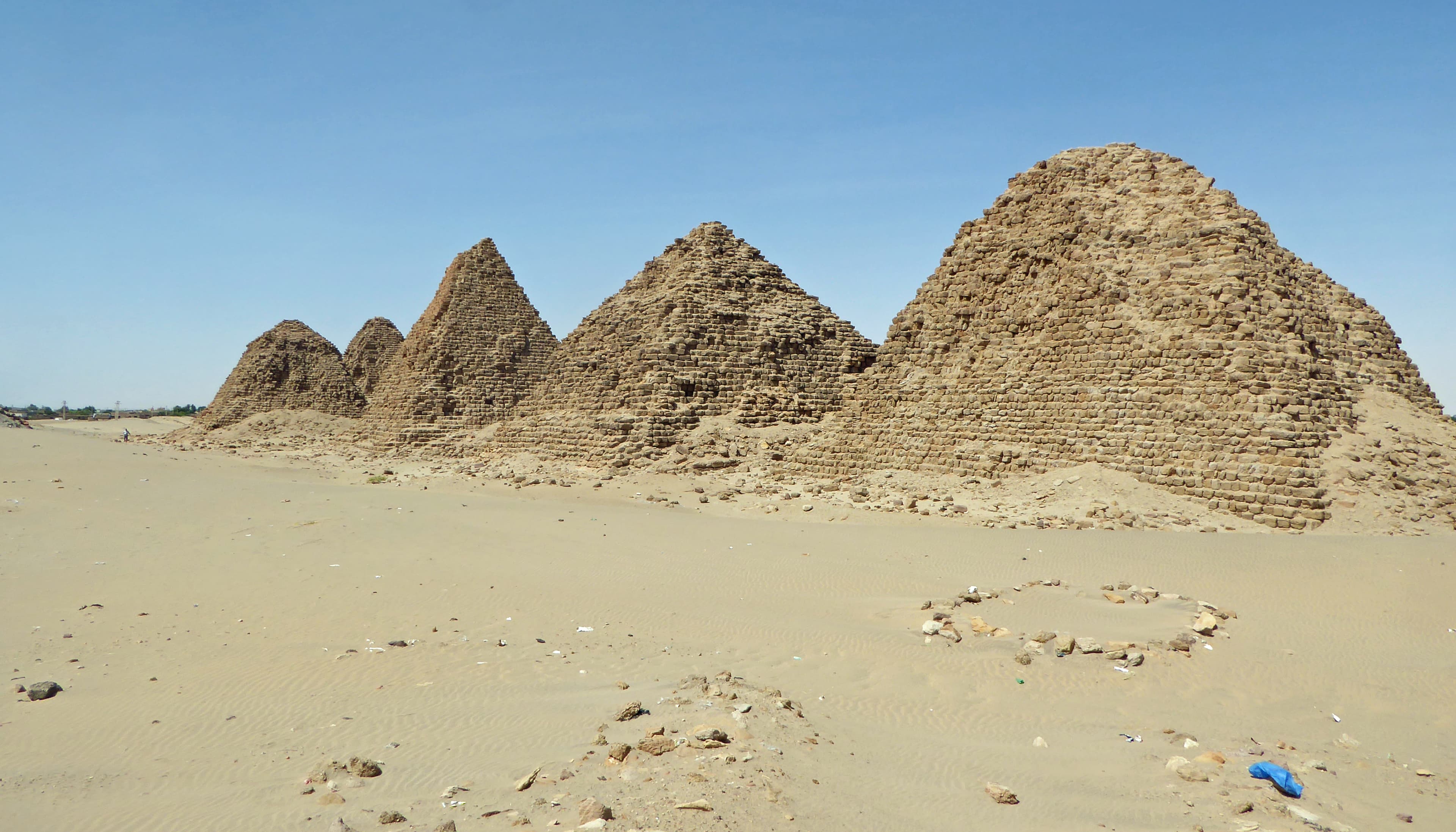
The Napatan kings were buried beneath steep, narrow pyramids at el-Kurru and Nuri, within sight of the holy mountain. When the Egyptian pharaoh Psamtik II sacked Napata in 593 BCE, the royal centre began its long shift south toward Meroë, though Jebel Barkal remained a place of coronation and pilgrimage. Today the mountain and its temples, palaces and pyramids form a UNESCO World Heritage Site.