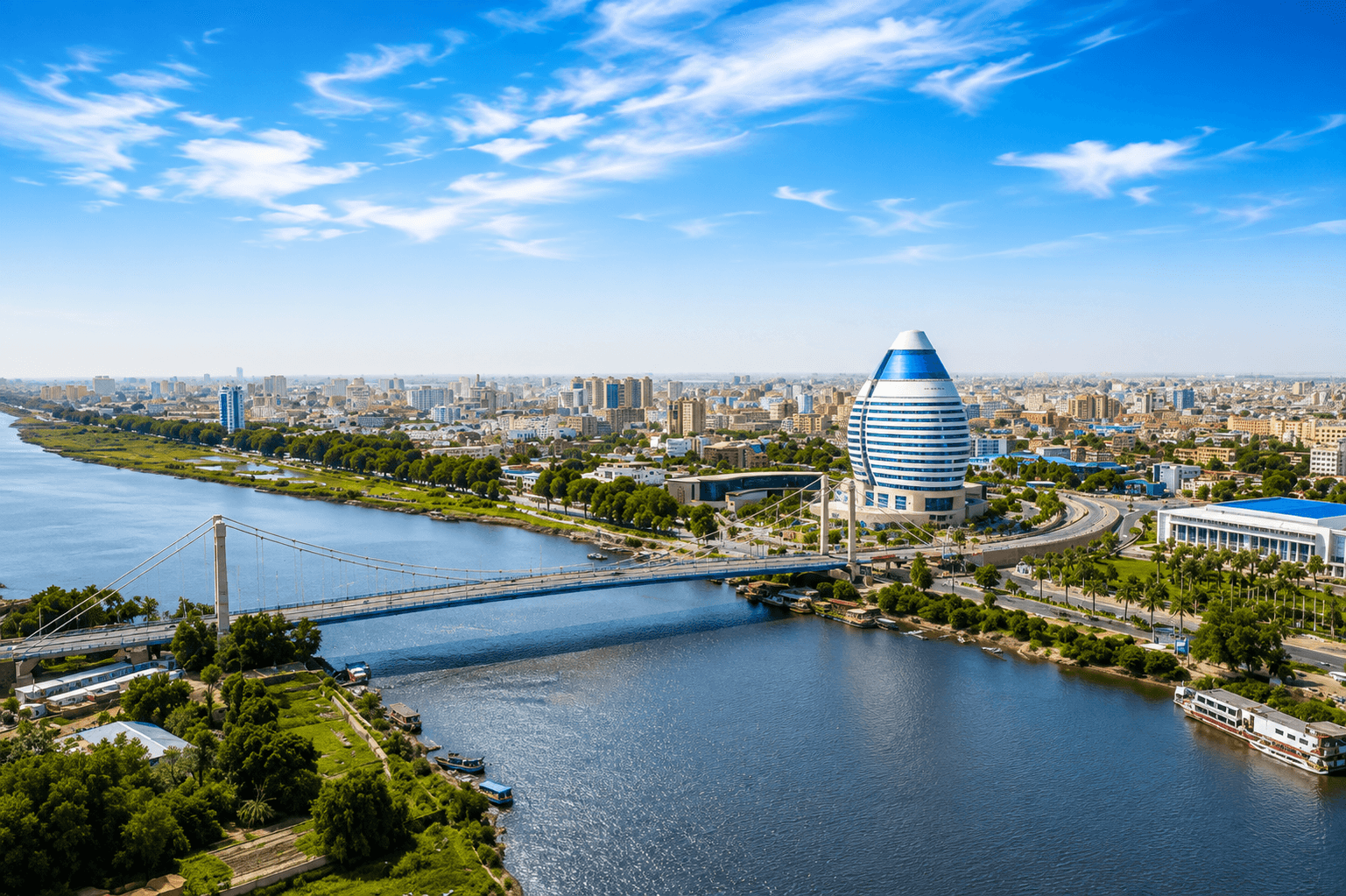
The Egyptian conquest of 1821 opened more than a century of outside rule and struggle for the Nile lands. From it grew the new capital of Khartoum, at the meeting of the Blue and White Niles; against it rose the Mahdist state of 1885, a Sudanese revolution that held the country until the Anglo-Egyptian reconquest of 1898. From 1899 Sudan was governed as an Anglo-Egyptian Condominium.
The road to self-rule opened in the 1950s. Ismail al-Azhari became the country’s first prime minister in 1954, and on 1 January 1956 Sudan raised its own flag as a sovereign republic — among the first of Africa’s colonies to win its independence.
The modern nation gathers the long inheritance of the Nile valley — its kingdoms and faiths, its many peoples and languages — into a single African state. That inheritance has been tested by conflict and by the peaceful separation of South Sudan in 2011, yet the deep heritage set out in these pages — from Kerma to Sennar — remains the shared foundation of Sudanese identity.