Far to the south, in the fertile “Island of Meroë” between the Nile and the Atbara, the kingdom of Kush found its longest-lasting home. The capital had moved here by the sixth century BCE, and when the royal burials followed around 300 BCE the kingdom entered its distinctive Meroitic age, which lasted until about 350 CE.
Meroë stood at the meeting of caravan routes and river trade, exporting gold, iron, ivory and exotic goods to the Mediterranean world. It smelted iron on such a scale that great mounds of slag still rise beside its temples. Here, too, the Kushites set down their own language in the Meroitic script — an alphabet whose sounds can now be read, though much of the language is still not understood.
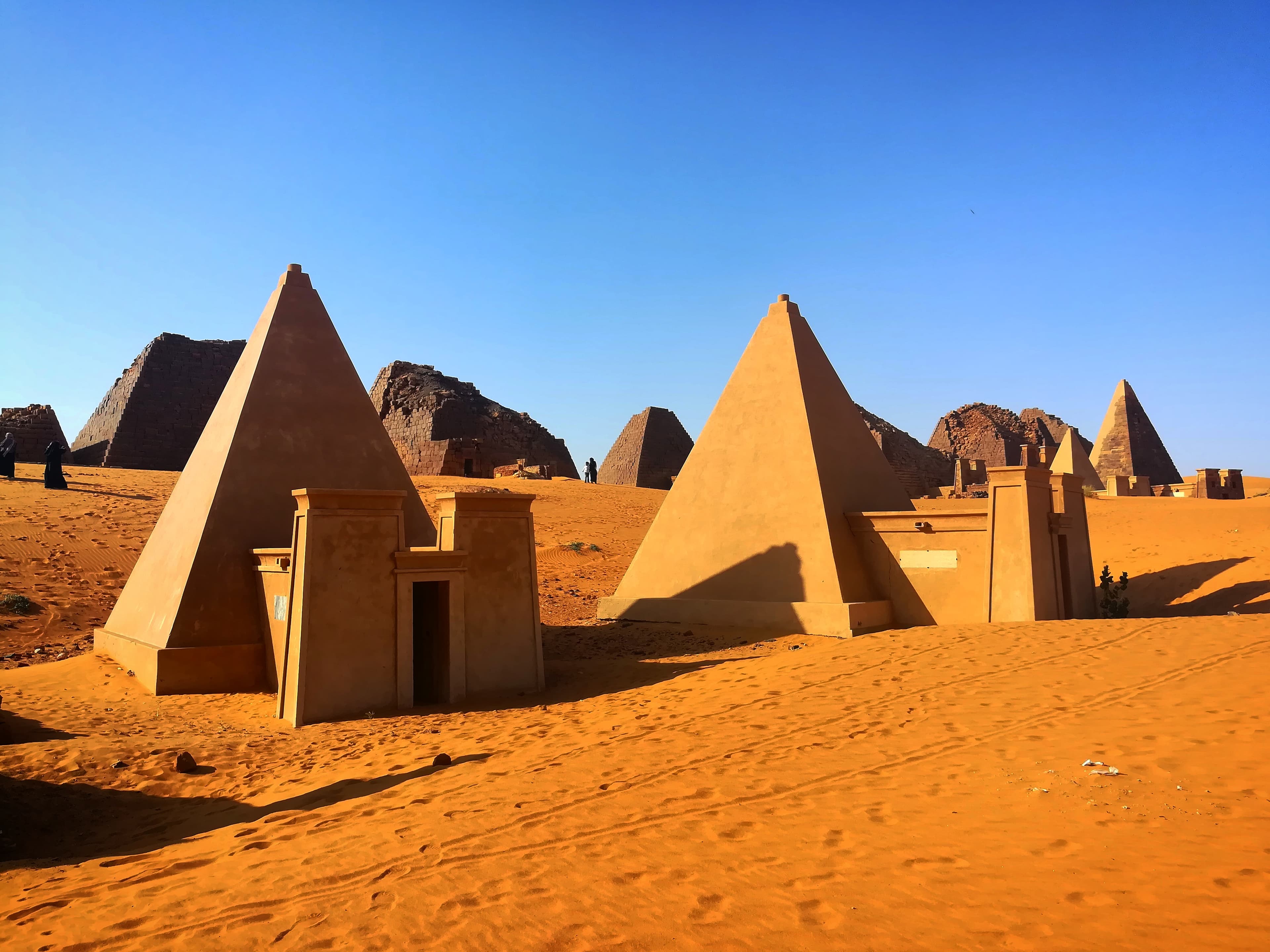
Its rulers were laid to rest beneath more than two hundred pyramids — the densest field of pyramids anywhere in the world — steeper and narrower than those of Egypt. The city worshipped the lion-god Apedemak at Naqa and Musawwarat es-Sufra, and was governed at times by formidable queens, the Kandakes; one of them, Amanirenas, secured a favourable peace with the emperor Augustus. The archaeological sites of the Island of Meroë are inscribed on the UNESCO World Heritage List.