Kerma rose on the east bank of the Nile just above the Third Cataract, in what is now northern Sudan. From around 2500 BCE it grew into the capital of the first kingdom of Nubia and the earliest city in Africa south of Egypt — a settlement of temples, palaces, workshops and houses that the Egyptians came to call the land of Kush.
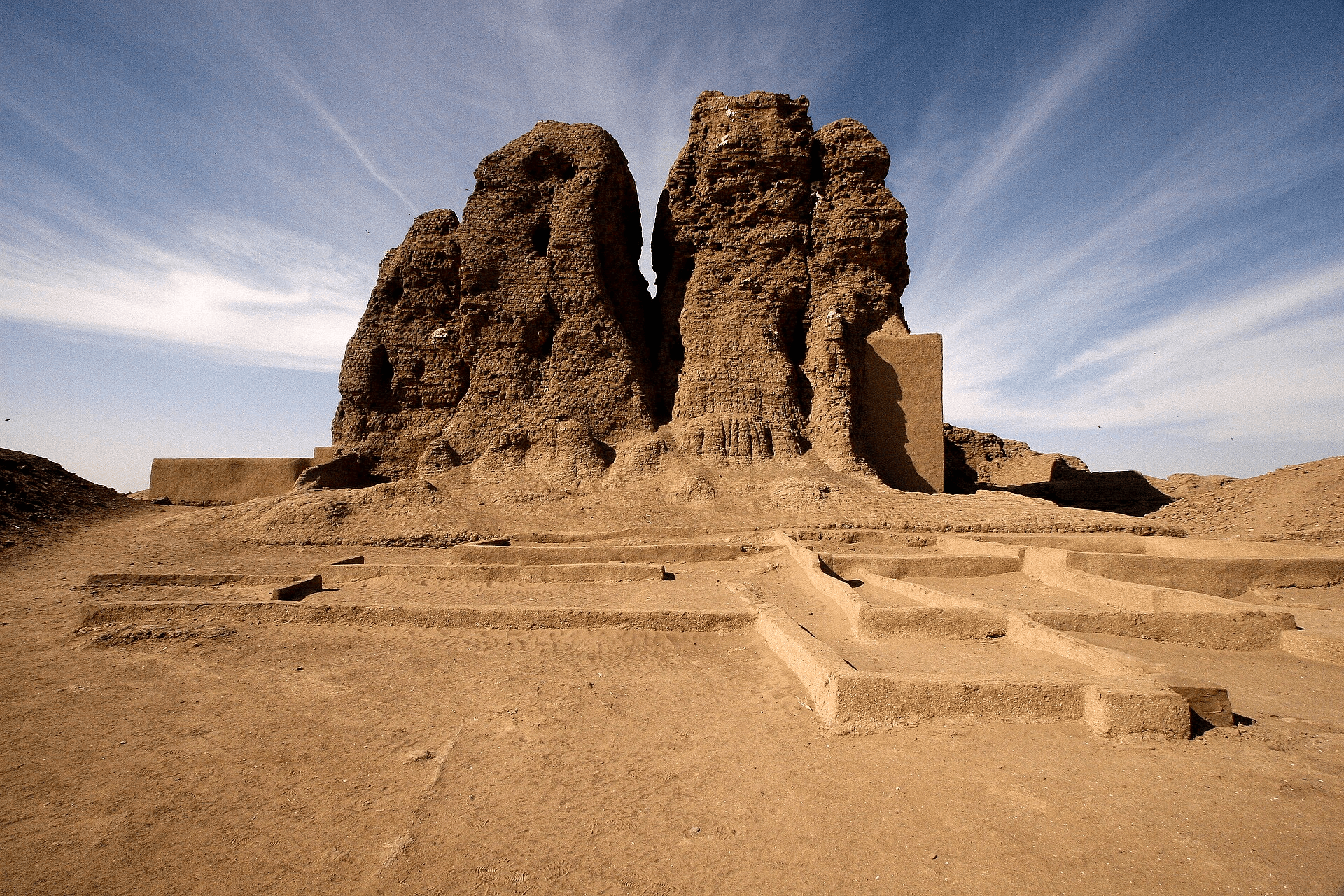
At its heart still stands the Western Deffufa, a solid mass of mudbrick some eighteen metres high — one of the oldest monuments in Africa and, with the Eastern Deffufa in the cemetery beyond, among only three such structures that survive. The kingdom reached its height in the Classic Kerma period, around 1750–1500 BCE, when its craftsmen made the celebrated black-topped red beakers, thin as eggshell, and its rulers were buried beneath vast earthen mounds — the greatest nearly ninety metres across — with rich offerings around them.
Kerma’s power rested on cattle and on the trade in gold, ivory and ebony that flowed north to Egypt, whose pharaohs built a chain of fortresses to hold back its advance. For a time, during Egypt’s own troubles, Kerma raided far into the north. Its independence ended around 1500 BCE, when the pharaoh Thutmose I conquered the city — but the Nubian kingdom it founded would rise again.