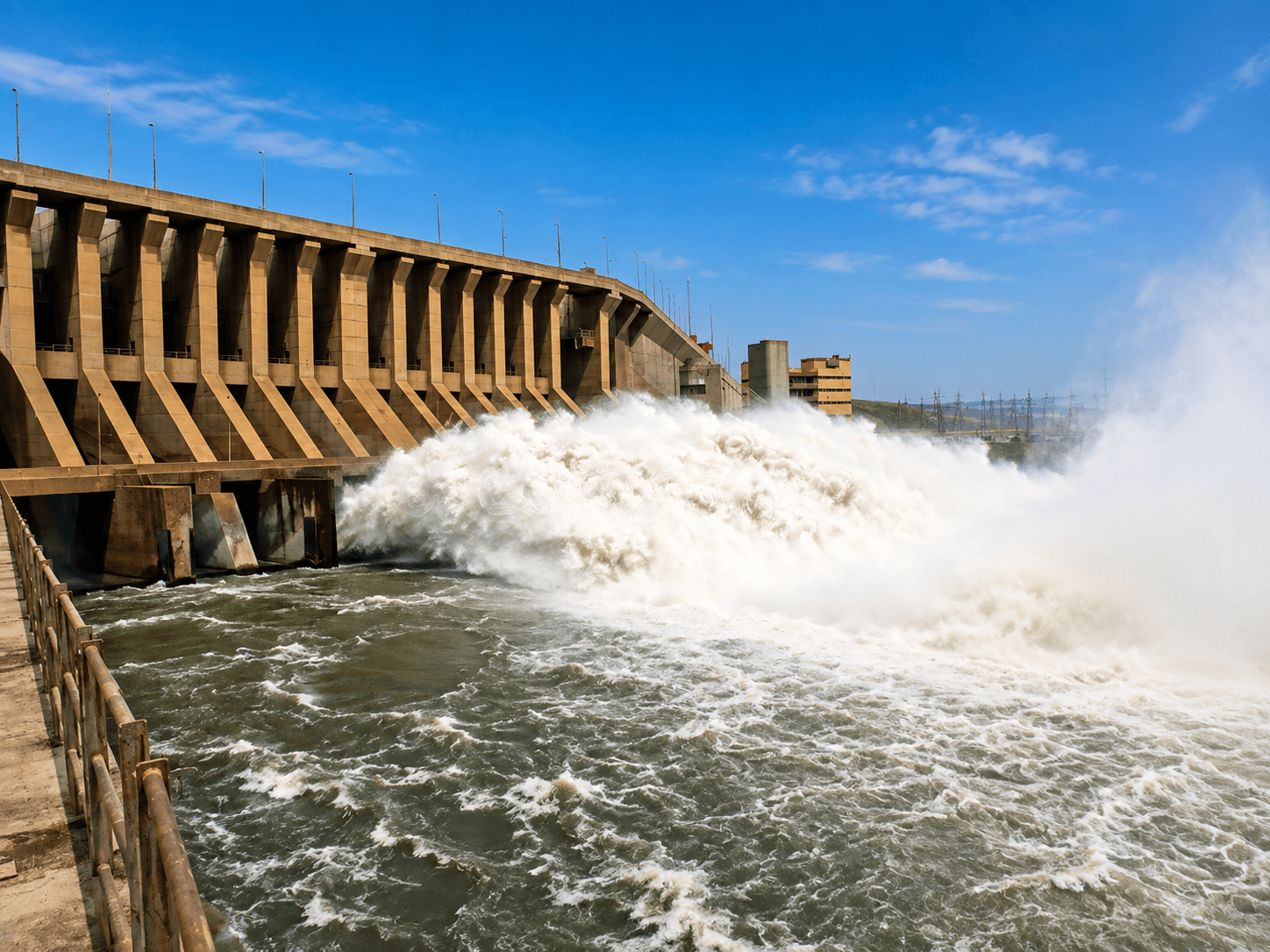
Energy is where Sudan's natural endowments and its development needs meet most visibly, and it offers one of the clearest long-term investment stories in the region. The backbone of the national grid is hydropower on the Nile. The Merowe Dam, commissioned in 2009 on the river's fourth cataract, has an installed capacity of about 1,250 MW across ten generating units and is designed to yield more than 6,500 GWh a year. The Roseires Dam on the Blue Nile, whose heightening was completed in 2013 to expand storage and irrigation, adds further hydro generation, and Sudan's total installed hydro capacity is on the order of 1,900 MW. Studies put the country's ultimately feasible hydro potential higher still, with well over 2,000 MW of additional capacity considered technically viable.
Yet the standout opportunity is solar. Sudan receives among the highest levels of solar irradiation on earth, with global horizontal irradiance of roughly 5.5 to 6.6 kWh per square metre per day (about 2,000 to 2,500 kWh per square metre per year) across most of its territory. To date only a fraction of that has been harnessed; solar supplies well under one percent of grid electricity, which frames the scale of the runway rather than the ceiling. National plans target on the order of 2,190 MW of grid-connected solar PV by 2035, and the combination of cheap land, clear skies, and large unmet demand makes utility-scale PV, distributed solar for mining and agriculture, and solar-plus-storage compelling. Wind is a complementary resource: assessments find that nearly half of Sudan's land area holds strong wind potential, with early projects in the hundreds-of-megawatts range.
The demand side reinforces the case. Access to electricity stands at roughly 62 percent of the population, about 84 percent in urban areas but only 49 percent rural, so there is significant headroom for new generation, transmission, and off-grid solutions to serve households, industry, and irrigated agriculture.
Sudan is also a hydrocarbon producer with an established downstream footprint. National oil reserves are estimated at over one billion barrels, and the country retains refining assets including the Khartoum Refinery (nameplate capacity around 100,000 barrels per day) and the smaller El-Obeid refinery. It is important to be candid: the Khartoum facility has been offline amid the current conflict, and refining infrastructure needs rehabilitation. That is itself part of the investment thesis, since modernization, feedstock security, and downstream product supply represent tangible opportunities as the sector is rebuilt.
The through-line is a country rich in primary energy, a great river, world-class sunshine, meaningful wind, and its own oil, paired with a large, under-served market. For long-horizon investors, Sudan's energy legacy of Nile hydropower and its largely untapped renewable potential together point toward a diversified, lower-cost power system, provided investment is matched with grid modernization and stable policy.