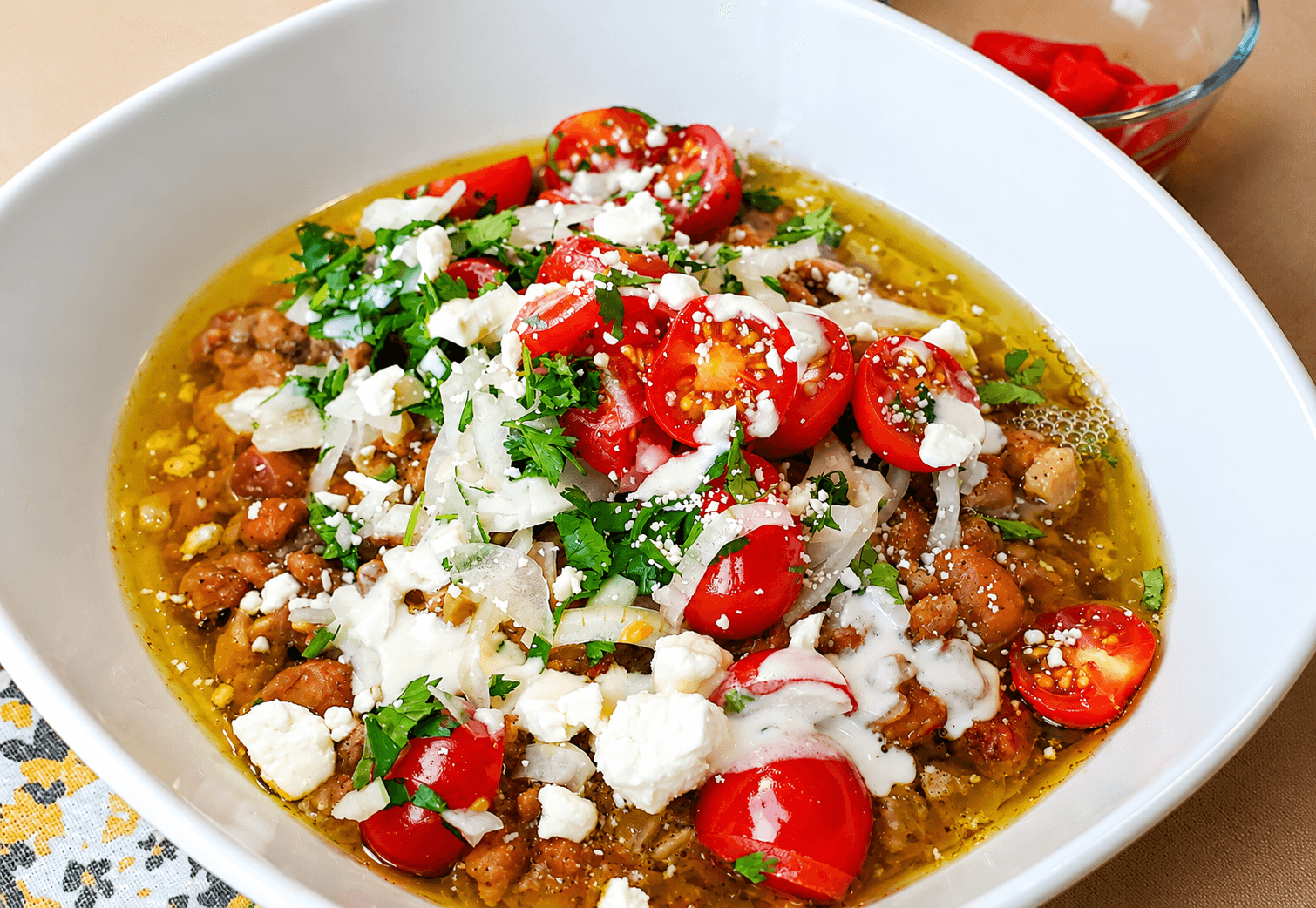
Ful, is considered one of Sudan's national dishes and an all-time breakfast staple shared across South Sudan, Egypt, and the wider Horn of Africa and Mediterranean region. Its origins are believed to trace back to Sudan itself.
The preparation begins with dried fava beans, rinsed and soaked in water overnight, or for at least eight hours. The next day, the beans are drained, covered in fresh water, and simmered for roughly one to two hours until soft enough to mash, with any foam skimmed off during cooking. Once tender, the beans are transferred — along with a little of their cooking liquid — into a serving bowl and lightly crushed with a fork or masher, giving the dish its signature coarse, hearty texture rather than a soupy consistency.
The beans are then seasoned directly with minced garlic, ground cumin, ground coriander, salt, and black pepper, sometimes finished with a squeeze of lemon or lime juice. What follows is the defining Sudanese touch: the beans are folded together with or topped by fresh diced tomatoes, chopped onions, and crumbled feta cheese, then finished with a generous drizzle of olive oil or virgin sesame oil. Many households add a halved or chopped hard-boiled egg, fresh parsley, arugula, or green onions, and some regional variations include yogurt, hot green peppers, or berbere spice for extra heat.
Ful is traditionally eaten without utensils, using pieces of flatbread to scoop up the beans directly from the communal bowl. Beyond its everyday role as breakfast, it carries strong cultural and religious weight, appearing prominently during Ramadan and other periods of fasting across the region. Rich in plant-based protein and fiber, simple to prepare, and endlessly adaptable with fresh toppings, ful remains one of the most cherished and unifying dishes of Sudanese cuisine.
Bellow are the ingredients